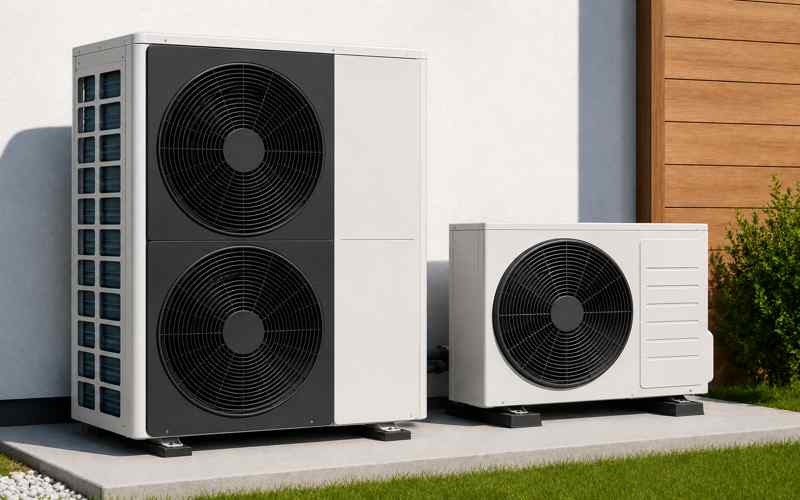
If you want efficient, quiet heating and cooling that works in cold climates and fits a variety of homes, Mitsubishi heat pumps deserve serious consideration. They deliver high-efficiency performance, flexible single- and multi-zone options, and proven cold-climate capability, so you can lower energy use and stay comfortable year-round.
This post will walk you through the core technologies that make those benefits possible—like inverter-driven compressors and variable refrigerant flow—and explain how different models and installation approaches match different spaces and needs. Expect practical comparisons and installation insights that help you decide which system fits your home and budget.
Core Technologies and Features
Mitsubishi systems rely on variable-speed compression, precise airflow control, and high efficiency certifications to deliver quiet, responsive heating and cooling with multi-room flexibility. These technologies determine comfort, running cost, and installation options you’ll encounter.
Inverter-Driven Compressor Technology
Mitsubishi uses inverter-driven compressors that modulate speed rather than cycling on and off. This lets the outdoor unit run at lower RPM for long periods, maintaining setpoint with smaller temperature swings and reducing wear from frequent starts.
You gain faster recovery after a temperature setback because the compressor can ramp up quickly when demand spikes. The system also reduces peak electrical draw, which lowers demand charges for some customers and helps with grid-friendly operation.
Noise and vibration fall when the unit runs at lower speeds, which matters if the condenser sits near a bedroom or neighbor’s property. Expect improved part life and fewer disruptive cycles compared with fixed-speed compressors.
Zoned Comfort Capabilities
Mitsubishi offers single-zone and multi-zone indoor units that let you control temperatures independently in rooms, additions, or converted spaces. Each indoor head has its own thermostat and control options, so you heat or cool occupied zones only.
You can mix air handlers—wall-mounted, floor-mounted, ceiling cassette—to match room layout and aesthetics. This flexibility reduces ductwork needs and simplifies retrofits where extending ducts would be costly or impossible.
Controls range from simple wall controllers to Wi‑Fi enabled apps, allowing schedules, setpoints, and mode changes per zone. Zoning lowers wasted conditioning and can significantly reduce energy use when you focus comfort on active spaces.
Energy Efficiency Ratings
Mitsubishi heat pumps carry regional efficiency metrics—SEER and HSPF in the U.S., and HSPF2 or COP values for cold‑climate ratings—that quantify seasonal cooling and heating performance. Higher numbers indicate lower expected energy consumption under standardized test conditions.
Look for inverter models with high SEER (often 18–30+) and HSPF values that perform well down to subfreezing temperatures. Mitsubishi publishes cold-climate specifications showing capacity retention at low ambient temperatures; these figures help predict real-world heat output in winter.
Efficiency also depends on installation quality, correct sizing, and controller settings. Ask your installer for measured performance data and projected seasonal costs for your specific load and climate.
Installation and Application Overview
You will learn where Mitsubishi heat pumps work best, how they affect indoor air quality, and what to expect for operational sound. Information focuses on real-world placement, system sizing, and factors that affect performance and comfort.
Residential and Commercial Use Cases
Mitsubishi ductless and ducted heat pumps fit a wide range of spaces. For homes, you can use single-zone wall-mounted indoor units for bedrooms or add multi-zone systems to serve living rooms, kitchens, and upstairs bedrooms without extending ductwork. You should size each indoor unit to the specific room’s heat load; typical bedroom installs run 6,000–12,000 Btu, while living areas often need 12,000–24,000 Btu depending on insulation and window area.
In commercial settings, mini-split and VRF (Variable Refrigerant Flow) models serve small offices, retail storefronts, and multi-tenant buildings. You will place outdoor condensers where they get airflow and service access; rooftops and exterior ground pads are common. For commercial projects, confirm electrical service, branch-circuit protection, and piping lengths against manufacturer limits to avoid performance loss.
Installation checklist:
- Confirm load calculations per room/zone.
- Verify outdoor unit clearance and mounting.
- Plan refrigerant piping and condensate drainage.
- Ensure electrical supply and disconnects meet code.
Indoor Air Quality Benefits
You will reduce airborne particulates and control humidity with properly installed Mitsubishi systems. Many indoor units include washable or replaceable filters that capture dust and pollen; some models offer advanced filtration or optional enzyme/odor filters for additional contaminant removal. Regular filter cleaning every 1–3 months, depending on use, keeps airflow steady and maintains efficiency.
Heat pumps also help manage humidity by removing moisture during cooling cycles. In mild climates, inverter-driven compressors provide longer, lower-speed runs, which stabilize temperature and limit rapid humidity swings. For best results, pair the system with proper ventilation—mechanical fresh-air intake or HRV/ERV —to prevent CO2 buildup and to dilute indoor pollutants you do not want to recirculate.
Maintenance tips:
- Clean filters on schedule.
- Inspect condensate drains for clogs.
- Consider ventilation upgrades if you tighten the building envelope.
Noise Level Considerations
You will hear both indoor unit blower noise and outdoor unit compressor operation, but Mitsubishi models generally emphasize quiet performance. Indoor units typically operate in the low- to mid-20 dB(A) range on low fan settings; expect higher levels on high or turbo modes. Placement matters: mount wall units above head height and away from sleeping areas to minimize perceived sound.
Outdoor units produce airborne and structure-borne noise. Select a location with at least the minimum manufacturer-recommended clearance and install on anti-vibration pads or a concrete pad to reduce transmission into building structure. For multi-family or commercial installs, check local ordinances and use sound-rated louvers or acoustic screens if required to meet decibel limits at property lines.

