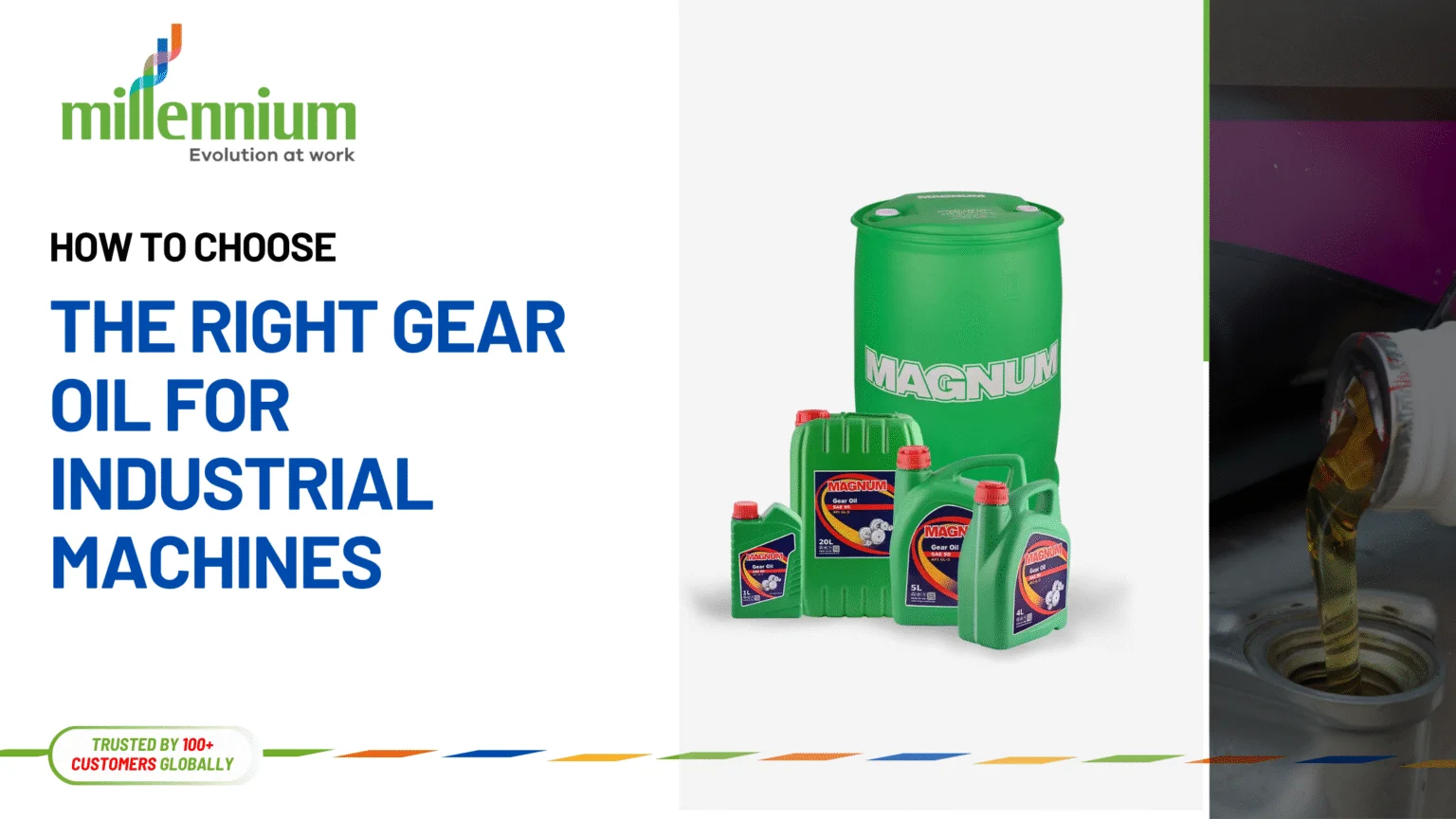
Industrial machines rely heavily on gear systems to transmit power smoothly and efficiently. From gearboxes in manufacturing plants to heavy-duty equipment in cement, steel, and mining industries, gears operate under constant stress, load, and varying speeds. Yet, one critical component that often doesn’t get the attention it deserves is gear oil. Selecting the right gear oil is not just about lubrication—it directly impacts equipment life, energy efficiency, maintenance costs, and overall productivity.
Why Gear Oil Deserves More Attention Than It Gets
Gear oil plays a vital role far beyond simply reducing friction. It acts as a protective barrier between metal surfaces, preventing direct contact under high load conditions. In industrial environments, gears are exposed to extreme pressures, high temperatures, moisture, dust, and sometimes corrosive contaminants. Without the correct gear oil, these factors can rapidly lead to wear, pitting, scuffing, and even catastrophic gear failure.
Another often-overlooked benefit of proper gear oil is heat dissipation. As gears mesh and rotate, friction generates heat. Gear oil helps carry this heat away, maintaining optimal operating temperatures and preventing thermal degradation of components. Additionally, high-quality gear oils provide corrosion protection, seal compatibility, and noise reduction—important for both equipment health and workplace safety.
Despite its importance, gear oil is frequently chosen based on price alone or replaced without considering operating conditions. This approach can lead to frequent breakdowns, unplanned downtime, and higher long-term costs. Giving gear oil the attention it deserves is a smart investment in machine reliability.
Types of Gear Oil
Understanding the different types of gear oil is the first step toward making the right choice. Industrial gear oils are broadly classified based on base oil type, additives, and application.
1. Mineral Gear Oils
These are petroleum-based oils widely used in standard industrial applications. They offer good lubrication and are cost-effective. Mineral gear oils are suitable for moderate load and temperature conditions but may have limitations in extreme environments.
2. Synthetic Gear Oils
Synthetic gear oils are formulated to perform under high loads, extreme temperatures, and extended drain intervals. They provide superior oxidation resistance, better viscosity stability, and improved energy efficiency. While they cost more upfront, they often reduce maintenance and operating costs over time.
3. EP (Extreme Pressure) Gear Oils
EP gear oils contain special additives that form a protective chemical film under high load conditions. These oils are ideal for heavily loaded gears, such as those found in rolling mills, crushers, and heavy conveyors.
4. Compounded Gear Oils
These oils include fatty additives that enhance lubricity and water resistance. They are commonly used in worm gear applications where sliding friction is high.
5. Food-Grade Gear Oils
Used in industries like food processing and pharmaceuticals, these oils are formulated to meet safety standards where incidental contact may occur.
How to Choose Gear Oil According to Load and Speed
Selecting the correct gear oil depends largely on load, speed, and operating conditions. Here’s how to approach it systematically:
1. Consider the Load
High-load applications require gear oils with EP additives to prevent metal-to-metal contact and surface fatigue.
Moderate-load systems can operate effectively with standard mineral or synthetic gear oils without heavy EP chemistry.
Always check the load-carrying capacity specified by the oil manufacturer and match it with your gearbox requirements.
2. Evaluate Operating Speed
Low-speed, high-torque gears need higher viscosity oils to maintain a strong lubricating film.
High-speed gears require lower viscosity oils to minimize drag, reduce heat generation, and improve efficiency.
Incorrect viscosity selection can lead to overheating or inadequate lubrication, both of which shorten gear life.
3. Temperature and Environment
Ambient and operating temperatures significantly influence oil performance. In hot environments, oils with high oxidation resistance are essential. In cold conditions, good low-temperature flow properties ensure proper lubrication during startup.
4. Gear Type and Design
Helical, spur, bevel, and worm gears all have different lubrication demands. Worm gears, for example, benefit from compounded or synthetic oils due to their sliding contact nature.
5. Manufacturer Recommendations
Always refer to the gearbox or equipment manufacturer’s lubrication guidelines. These recommendations are based on design tolerances, materials, and operating parameters.
MAGNUM Gear Oils: Perfect Fit for Industrial Machines
When it comes to reliable lubrication solutions, MAGNUM Gear Oils are engineered to meet the demanding needs of modern industrial machinery. Formulated with high-quality base oils and advanced additive technology, MAGNUM gear oils provide excellent load-carrying capacity, thermal stability, and long service life.
MAGNUM Gear Oils offer:
Superior protection against wear, pitting, and scuffing
Excellent oxidation and thermal resistance for extended oil drain intervals
Reliable performance across a wide range of loads and speeds
Compatibility with various gear materials and seals
Whether your application involves heavy-duty gearboxes, high-speed industrial drives, or continuous operation under harsh conditions, MAGNUM Gear Oils deliver consistent performance and peace of mind.
Conclusion
Choosing the right gear oil for industrial machines is a strategic decision that directly affects equipment efficiency, reliability, and operating costs. By understanding why gear oil matters, recognizing the different types available, and selecting the correct oil based on load, speed, and operating conditions, industries can significantly reduce downtime and extend machinery life.
Investing in high-quality solutions like MAGNUM Gear Oils ensures that your gear systems remain protected, efficient, and ready to perform—even in the toughest industrial environments.